




AI search has changed the shape of SEO, but it has not killed the fundamentals. The big shift is this: Google is answering more queries directly through AI Overviews and AI Mode, which means some easy clicks are disappearing.
What still works is the stuff that made a site genuinely useful in the first place: clean technical SEO, strong internal linking, original information, clear topical coverage, good page experience, and pages that deserve to be cited or clicked after the AI summary.
Google’s current Search Central documentation is very direct on this point: the best practices for SEO remain relevant for AI features, there are no extra requirements to appear in AI Overviews or AI Mode, and no special AI-only markup is required.
That is the answer most site owners need first. You do not need a mysterious “AI SEO trick.” You need to double down on the parts of SEO that survive interface changes because they are tied to usefulness, trust, and discoverability rather than to one SERP layout.
The short answer
SEO still works in 2026, but lazy SEO works less. If your strategy depends on thin informational pages, recycled summaries, or ranking for broad questions that Google can now answer itself, you are more exposed. If your strategy is based on original insight, better structure, clearer intent match, stronger product or brand trust, and pages that help people do something after they learn, you still have a real edge. Google says AI Overviews and AI Mode surface relevant links, can show a wider and more diverse set of pages through query fan-out, and still rely on the same foundational SEO best practices as Search overall.
What changed in AI search
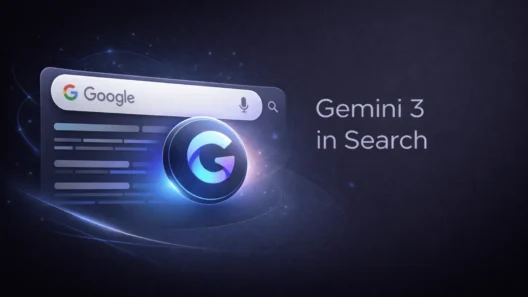
The search environment is different now because AI answers are no longer a side experiment. Google says Gemini 3 is now the default model for AI Overviews globally, and users can move directly from AI Overviews into AI Mode conversations. Google also says AI features can use a query fan-out technique that searches related subtopics and surfaces a broader set of supporting pages than a classic search might.
That change affects traffic. Public studies are not perfect, but they all point in the same direction: AI summaries can reduce clicks to traditional results, especially for top-of-funnel queries. Ahrefs says the presence of an AI Overview correlated with a 58% lower average CTR for the top-ranking page in its December 2025 refresh, while Semrush found AI Overviews appeared for 15.69% of keywords in November 2025 after peaking much higher earlier in the year. Those are third-party studies, not Google data, so they should be read as directional, not universal.
A simple way to frame the new reality is this:
| What changed | What still works |
|---|---|
| More questions get answered before the click | Pages that add depth, proof, utility, or action after the answer |
| AI summaries can reduce easy CTR | Strong intent matching and stronger downstream value |
| Google can cite a wider range of sources | Clear site structure, crawlability, and content worth citing |
| Thin summary content is easier to replace | Original analysis, experience, and useful specificity |
What still works in SEO in 2026
Technical SEO still matters
This is still the floor. Google says pages must be indexed and eligible to appear with a snippet in Search to show up as supporting links in AI Overviews or AI Mode. It also says crawl access, internal links, page experience, textual content availability, high-quality media, and valid structured data all remain worthwhile.
That means basic technical discipline still pays off:
- allow crawling
- keep important pages indexable
- fix internal orphan pages
- avoid hiding core information in scripts or images
- make the site fast and usable enough that people stay once they arrive
If a page cannot be found, crawled, indexed, or understood, AI search does not rescue it.
Helpful, original content still matters
Google’s guidance has not moved away from people-first content. It says ranking systems prioritize helpful, reliable information created to benefit people, not content made mainly to manipulate rankings. It also tells publishers to ask whether content provides original information, research, analysis, or substantial added value beyond obvious rewrites.
This matters even more in AI search because summary-style content is easier to compress into an AI answer. Pages with first-hand experience, original reporting, useful examples, proprietary data, honest comparisons, or clearer practical steps are harder to replace. The bar is not “longer content.” The bar is “content with real value density.”
Internal linking and site structure still matter
Google explicitly calls out internal linking in its AI features guidance. That is not a small point. In an AI search environment, internal links do more than help crawling. They help Google understand which pages are important, how topics connect, and where the best supporting evidence on your site lives.
A messy site architecture makes your content harder to trust and harder to surface. A clean hub-and-spoke structure, clear category logic, and consistent anchor text still work because they improve both discovery and interpretation.
Rich, useful page assets still matter
Google says important content should be available in textual form, but it also recommends supporting text with high-quality images and videos where relevant. That is a strong hint about what wins now: pages that are easier to understand, richer in context, and more helpful to users who land after an AI summary.
This is especially relevant for product pages, tutorials, visual explainers, recipes, travel, and any topic where users want evidence, not just claims. Good assets make the page more useful after the click, which matters more when every click is harder to earn.
Structured data still matters, but only when it matches the page
Google is also clear here. There is no special AI schema required for AI Overviews or AI Mode, but structured data still matters when it accurately matches the visible page content.
That means structured data is still worth doing for product pages, articles, FAQs where eligible, reviews where compliant, and ecommerce pages, but not as a gimmick. It still helps machines interpret the page cleanly. It just is not a shortcut into AI features.
Brand trust and real expertise matter more
Google’s people-first content page still points back to E-E-A-T as part of how ranking systems try to identify the most helpful results. In practical terms, that means trust signals matter more when AI summaries compress basic information and leave users choosing where to go deeper.
A recognizable brand, transparent authorship, visible expertise, clearer about pages, stronger reputation, and up-to-date business or merchant data all make more difference when the search interface itself is doing more filtering before the click. Google’s AI feature guidance even calls out keeping Merchant Center and Business Profile information up to date.
What works less well now
Some tactics still function, but they are weakening.
Pages built to lightly remix what is already ranking are in a worse position now. Google’s guidance on generative AI content says AI can be useful for research and structure, but using it to generate many pages without adding value may violate scaled content abuse policies. It also says to focus on accuracy, quality, and relevance, including titles, descriptions, structured data, and alt text.
So what works less well now?
- broad summary posts with no new angle
- programmatic page generation without clear user value
- SEO-first titles masking thin content
- content that answers the obvious question but nothing more
- over-reliance on CTR from informational head terms
The issue is not that AI-created content is banned. The issue is that generic content is easier to ignore and easier for Google to summarize away.
How to measure SEO when clicks get harder to read
Google says traffic from AI features is included in Search Console’s standard Web search reporting, not broken out into its own separate report. It also recommends pairing Search Console with Analytics and notes that clicks from AI Overview result pages have, in Google’s observation, been higher quality in terms of time spent on site.
That means old reporting habits need an upgrade. In 2026, you should care less about rank alone and more about:
- impressions by page type
- CTR shifts by query class
- engaged sessions
- conversion rate
- revenue or lead quality from organic
- assisted conversions from informational pages
If clicks drop but conversions hold or improve, your SEO may be healthier than it looks.
A simple SEO priority list for the AI search era
If you want a practical checklist, use this order:
- Fix crawl, indexation, and internal linking issues. Google still requires pages to be indexable and eligible for snippets to appear in AI features.
- Upgrade thin pages that only summarize the obvious. Google still prioritizes helpful, original, people-first content.
- Publish content with original data, experience, or clear added value. Google explicitly asks whether content provides original information, reporting, research, or analysis.
- Improve product, local, and brand trust signals. Google specifically recommends accurate Merchant Center and Business Profile data.
- Track conversions and post-click quality, not just top-line traffic. Google says AI-feature traffic lives inside normal Web reporting and suggests combining Search Console with Analytics.
Final takeaway
SEO in the age of AI search still works in 2026, but it rewards sharper work. Google’s own documentation keeps repeating the same underlying message: there is no special AI optimization layer you need to chase. What still works is foundational SEO done well, plus content that is useful enough to be cited, clicked, trusted, and acted on after the summary.
The real update is strategic, not mystical. Stop building pages that only exist to rank. Build pages that still matter after the AI answer appears. That is the version of SEO most likely to keep working.
FAQs
Is SEO still worth investing in during AI search?
Yes. Google says the same foundational SEO best practices still apply to AI Overviews and AI Mode, and sites appearing in AI features are still part of Search traffic. The opportunity shifts, but it does not disappear.
Do I need special schema or an AI file for AI search?
No. Google explicitly says there are no additional requirements, no special AI text files, and no special schema needed to appear in AI Overviews or AI Mode.
Is AI-generated content bad for SEO?
Not automatically. Google says generative AI can be useful for research and structure, but generating many pages without adding value may violate spam policies. The deciding factor is usefulness, originality, and quality, not whether AI touched the workflow.
How should I measure SEO success now?
Use Search Console and Analytics together. Google says AI feature traffic is included in Web reporting, and it recommends looking at traffic changes overall and combining Search Console with Analytics data.


[…] optimization plus AI search and SEO workflow […]
[…] a purpose after the AI response. That is why lower-funnel usefulness becomes more important as AI search expands into commercial and transactional territory. Semrush’s data suggests that expansion is […]