


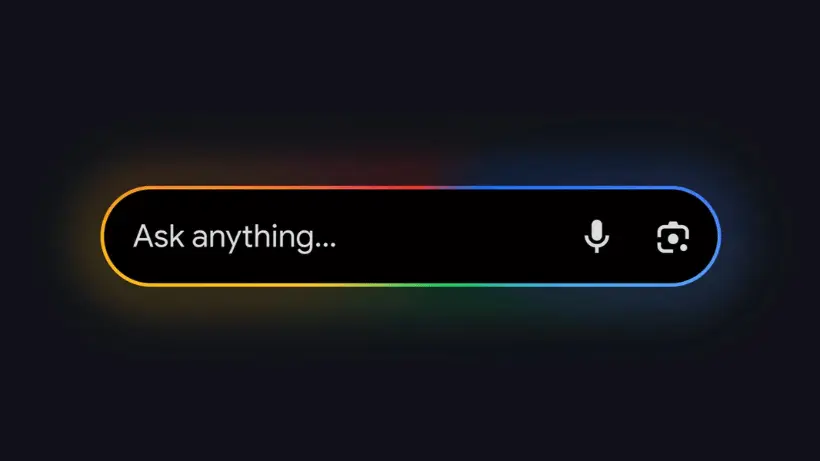

Google’s AI Mode in Google Search could reduce a meaningful share of traditional organic clicks, especially for research-heavy queries where users once had to open several pages to get a complete answer. But that does not automatically mean SEO loses all value.
A more realistic outcome is this: easy clicks shrink, selective clicks grow, and the sites that still win are the ones that offer the clearest, most trusted, most useful next step after the AI answer.
That matters because AI Mode is not just another SERP feature. Google describes it as a deeper AI search experience that can handle complex, multi-part questions, break them into subtopics with a “query fan-out” approach, search across multiple sources, and return an AI-generated answer with links to supporting websites.
Google also says many capabilities first tested in AI Mode may later move into the main Search experience, which makes it more than a side experiment for SEOs to ignore.
What AI Mode in Google Search actually is
AI Mode is Google’s conversational search layer for deeper exploration. It is built into Search, supports follow-up questions, and is designed for queries that need reasoning, comparison, or more context than a standard results page can easily provide.
Google’s own help documentation says AI Mode can search across subtopics at the same time and may provide web links when confidence in a direct AI response is lower. It also warns that AI responses can make mistakes, which is important for both users and publishers.
This is already moving beyond a tiny beta. Google announced a U.S. rollout of AI Mode in Search in 2025, and its support pages now show broader availability across many countries, territories, and languages.
Some advanced capabilities remain gated. For example, Deep Search in AI Mode, which Google says can browse hundreds of sites and create a cited report, is currently tied to eligible Google AI subscribers in Labs.
Why AI Mode could change SEO traffic
Fewer low-intent clicks
The biggest likely change is simple: fewer people will click when the answer feels complete inside Google. We do not yet have a mature public dataset showing AI Mode’s exact click impact at scale. But public research on AI Overviews, which is the closest live signal we have, points in one direction.
Ahrefs reported that AI Overviews reduced the organic CTR of the position-one result by about 58% as of December 2025. Pew found users clicked a traditional search result in 8% of visits when an AI summary appeared, versus 15% when it did not.
That does not prove AI Mode will mirror AI Overviews one for one. AI Mode is a different interface and a deeper workflow. But it is a strong warning sign. If Google can answer more of the query before the click, top-of-funnel traffic becomes harder to win.
That is especially true for pages built around simple definitions, basic comparisons, and easy summary content. This is an inference based on how Google describes AI Mode and how published AI Overview studies show users clicking less when Google presents synthesized answers directly in the search experience.
More value in being cited, not just ranked
Traditional SEO has long focused on rank position. AI Mode shifts some of that value toward citation visibility. Google says AI Mode and AI Overviews surface relevant links and may show a wider, more diverse set of helpful links than a classic search result page because the system identifies supporting pages while generating the response.
That means being one of the pages the AI chooses to reference could matter almost as much as classic blue-link rankings for some queries.
This is where the opportunity sits. Google also says these AI features can create opportunities for more types of sites to appear. So while some sites may lose broad, low-intent visits, others may gain visibility if they become strong citation candidates for specific questions, workflows, or product decisions.
Longer search journeys before the click
AI Mode is built for follow-ups. Google now lets users move from AI Overviews into conversation flows, and Google says features from AI Mode may graduate into core Search over time.
That means a search session may contain more back-and-forth before a user visits any website. When the click finally happens, it may be later in the journey and tied to a stronger purpose, such as comparing products, validating a claim, making a booking, or using a tool.
For many sites, that could mean less traffic but better intent. Google has already said clicks from search pages with AI Overviews tend to be higher quality, meaning users are more likely to spend more time on site.
That statement is about AI Overviews, not AI Mode directly, but it is the clearest official hint that AI-driven search may filter out weaker clicks and leave more engaged ones behind.
Which websites are most exposed
The most exposed sites are the ones whose value is mostly “answering the question first.” That includes:
- thin informational blogs
- affiliate content that adds little beyond what the SERP already shows
- glossary-style pages
- basic “what is” and “best X for Y” articles with weak original insight
- publisher pages that depend on high-volume, low-intent informational traffic
That risk is not theoretical. Semrush’s large-scale AI Overview study found these AI answers stabilized at around 15.69% of queries in November 2025, and they have been spreading beyond purely informational searches into commercial, transactional, and navigational intent as well.
Ahrefs also found AI Overviews appear far more often on question-based and long-tail queries. Those are exactly the query classes many content teams have relied on for years.
What will matter more in AI Mode SEO
Original information
If Google can summarize the obvious, then obvious content loses leverage. The safest way to stay useful is to publish what AI cannot easily compress from ten similar articles. That means first-hand experience, original research, strong examples, expert commentary, proprietary data, real testing, and up-to-date specifics.
Google’s own guidance for AI-era content still centers on helpful, reliable, people-first content. It also warns that using generative AI to mass-produce pages without adding value can violate spam policies.
Clear structure and strong page signals
Google says there are no special optimizations or extra schema requirements just to appear in AI Overviews or AI Mode. The basics still matter: crawlability, internal linking, textual clarity, good page experience, matching structured data, and snippet eligibility. In plain terms, AI Mode does not replace SEO fundamentals. It raises the bar for doing them well.
Commercial depth and action-focused content
AI answers are good at summarizing. They are less likely to replace pages that help a user take action with confidence. Product pages with clear specs, pricing context, policies, comparisons, demos, calculators, local proof, and trust signals still serve a purpose after the AI response. That is why lower-funnel usefulness becomes more important as AI search expands into commercial and transactional territory. Semrush’s data suggests that expansion is already underway.
How to measure the traffic shift properly
Do not judge this shift with clicks alone.
Google says traffic from AI features, including AI Mode, is included in Search Console’s standard Web search reporting. It also recommends combining Search Console with Analytics data to understand what happens before and after the visit.
That means your reporting should focus on at least four things: impressions, clicks, engaged sessions, and conversions.
A smart workflow looks like this:
- segment pages by intent, especially informational vs commercial
- compare pre-click metrics in Search Console with on-site behavior in Analytics
- watch for falling clicks but stable or rising conversion rates
- review which pages keep winning branded and bottom-funnel visits
- manually inspect AI-heavy SERPs to see whether your site is being cited, not just ranked
This is the key mindset shift: in an AI Mode world, traffic quality may matter more than traffic volume.
What not to do
Do not respond by flooding your site with AI-written pages. Google’s guidance is clear that scaled content without real value can violate spam policies.
Do not hunt for imaginary “AI Mode schema.” Google says there is no special markup required for AI Mode or AI Overviews.
Do not assume ranking first protects you. The public AI Overview studies suggest even top-ranking pages can lose large chunks of CTR when Google answers the query directly.
The real takeaway for SEO teams
AI Mode in Google Search could change SEO traffic in three big ways.
First, it could cut the easy clicks that used to come from broad informational content. Second, it could reward sites that become trusted sources inside AI-generated answers.
Third, it could make conversion quality, brand recall, and citation visibility more important than raw session volume. Those are not small changes. They reshape what “winning” in SEO looks like.
The best response is not panic. It is adaptation. Build pages worth citing. Publish things worth trusting. Make your commercial and expert content impossible to replace with a summary. If AI Mode in Google Search keeps expanding, that is where durable SEO traffic will come from.
FAQs
Is AI Mode the same as AI Overviews?
No. AI Overviews are AI summaries that appear on the results page when Google thinks they add value. AI Mode is a deeper conversational search experience built for follow-up questions, reasoning, and broader exploration. Google is increasingly connecting the two experiences.
Will AI Mode kill SEO traffic completely?
No. It is more likely to redistribute traffic than erase it. Expect less low-intent informational traffic and more competition for high-intent visits, citations, and action-driven clicks. That conclusion is supported by Google’s product design and by the public click data we already have from AI Overviews.
Can you optimize specifically for AI Mode?
Not with a special tactic or markup. Google says there are no extra technical requirements or special schema just for AI Mode or AI Overviews. Standard SEO best practices still apply.
How should I track AI Mode traffic?
Use Search Console and Google Analytics together. Google says AI feature traffic is included in the overall Web search reporting in Search Console, so you need to pair click and impression data with engagement and conversion data on site.